
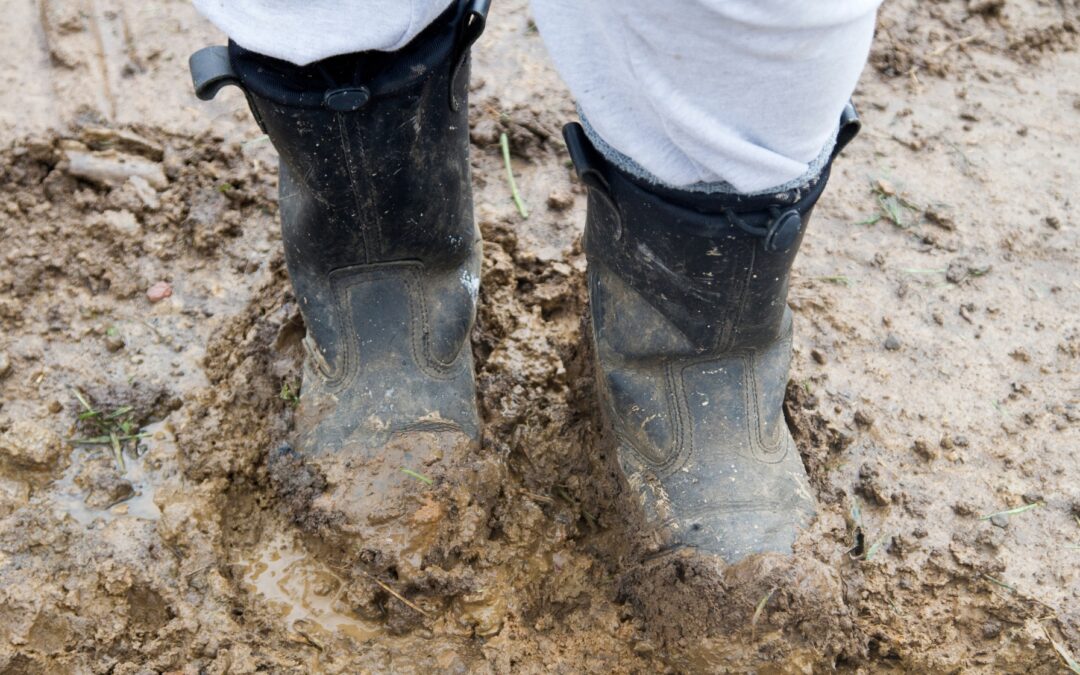
Few things can disrupt construction productivity faster than excessive mud. What starts as a little tracked soil can quickly become a full-blown operational issue by slowing equipment, damaging access roads, compromising safety, and driving up costs.
Across seasons, but especially in wet and winter conditions, mud control construction strategies succeed because of one critical decision: selecting the right base layer materials.
While erosion controls, mats, and surface treatments all play a role, it is the foundation beneath them that determines whether a jobsite stays workable or breaks down into a maintenance headache. For contractors and engineers, understanding how base aggregates function in wet environments is essential to preventing recurring construction mud problems.
Why Mud Is More Than a Nuisance on Construction Sites
Mud is not just an inconvenience – it is a symptom of structural failure at the ground level. When soils become saturated and loads are applied, fine particles migrate upward, water becomes trapped, and bearing capacity drops sharply.
Common consequences include:
- Reduced equipment mobility and productivity
- Unsafe walking and working conditions
- Rutting that worsens with each pass
- Excessive rework and material replacement
- Tracking mud onto public roadways, creating compliance risks
Effective mud control construction begins long before the first truck rolls onto a job site. It starts with site preparation and the selection of materials designed to manage water and support load under adverse conditions.
The Role of the Base Layer in Mud Control Construction
The base layer acts as the interface between native soils and construction activity. Its primary functions are to distribute loads, promote drainage, and prevent the upward migration of fines.
When base materials are poorly chosen or improperly placed, water becomes trapped, soil becomes soft, and mud inevitably follows. On the other hand, a well-designed base layer can dramatically reduce the need for ongoing mitigation measures.
Key base layer objectives include:
- Separating soft subgrades from traffic loads
- Providing a stable, all-weather working surface
- Allowing water to move away from active areas
- Maintaining performance through wet and cold cycles
Gravel for Mud Prevention: Why Shape and Gradation Matter
Not all gravel performs equally when it comes to mud prevention.
Gravel for mud prevention must do more than simply cover the ground. It must resist movement, manage water, and maintain structure under repeated loading. Angular, crushed aggregates outperform rounded gravels in wet conditions because they interlock mechanically. This interlock improves stability and reduces displacement when saturated.
Equally important is gradation. Well-graded aggregates compact tightly, limiting void space where water can accumulate. Poorly graded materials may drain initially but often shift under traffic, allowing fines to migrate upward and create muddy conditions at the surface.
Site Prep Rock: Building the Foundation Before Problems Start
Proper site prep rock selection is one of the most cost-effective ways to prevent long-term construction mud problems. During early site development, placing the right material establishes a stable platform for all subsequent activities.
Site prep rock is commonly used for:
- Initial access roads
- Equipment staging and laydown areas
- Building pads and crane mats
- Temporary haul routes
By installing a durable, well-graded rock layer early, contractors reduce the need for constant grading, supplemental material, and reactive mud control measures later in the project.
Rock Base for Winter: Performing When Conditions Are Worst
Winter magnifies every weakness in a jobsite’s base layer. Freeze–thaw cycles, persistent moisture, and limited evaporation can quickly undermine marginal materials. A properly designed rock base for winter must balance strength, drainage, and durability.
Critical characteristics include:
- Resistance to breakdown during freeze–thaw cycles
- Sufficient thickness to bridge weak subgrades
- Gradation that limits water retention while maintaining stability
Using durable, crushed stone with proven cold-weather performance helps ensure the base layer remains functional even when temperatures fluctuate and precipitation is constant.
Mud Mat Solutions vs. Permanent Base Materials
Mud mat solutions, such as timber mats, composite mats, or steel plates, are often used to manage localized problem areas or support heavy equipment. While effective in specific applications, they are not a substitute for a properly constructed base layer.
Without a stable aggregate foundation beneath them, mats can settle unevenly, shift, or pump mud to the surface. In many cases, combining mud mats with well-designed base materials delivers the best results.
Engineers and contractors should view mats as a supplemental tool, not the primary defense against construction mud problems.
Preventing Construction Mud Problems Through Smart Design
Preventing mud is far more economical than reacting to it. Smart mud control construction strategies integrate base layer materials into the overall site design rather than treating them as temporary fixes.
Best practices include:
- Evaluating native soil conditions early
- Matching aggregate type to traffic loads and exposure
- Designing for drainage, not just surface coverage
- Working with aggregate suppliers to meet performance goals
These steps reduce downtime, improve safety, and help projects stay on schedule—even in challenging weather.
The Value of Working With an Experienced Quarry Partner
A knowledgeable quarry is more than a material source. In fact, it can be a technical partner in site performance. Experienced aggregate producers can recommend materials based on soil conditions, expected loads, and seasonal challenges.
Reliable quarries like Roblar provide:
- Consistent gradation and quality control
- Test data to support engineering decisions
- Materials suited for long-term performance, not short-term fixes
This collaboration is especially important when addressing mud control construction in high-traffic or winter conditions.
A Strong Base Is the Best Mud Control Strategy
Mud isn’t accidental nor inevitable. It’s usually the result of water, load, and inadequate base materials working against each other. By selecting the right gravel for mud prevention, investing in proper site prep rock, and designing a rock base for winter performance, contractors and engineers can dramatically reduce construction mud problems. The result is a safer, more efficient jobsite—one that stays productive regardless of what the weather brings.
Roblar Quarry LLC provides a streamlined delivery process built around your timeline, helping keep your project moving without delays. We focus on dependable, on-time delivery of construction rock so you receive the materials you need precisely when you need them. With an emphasis on convenience, reliability, and tailored solutions, we adjust our services to fit your specific project requirements. Contact us today to schedule your professional materials delivery.