
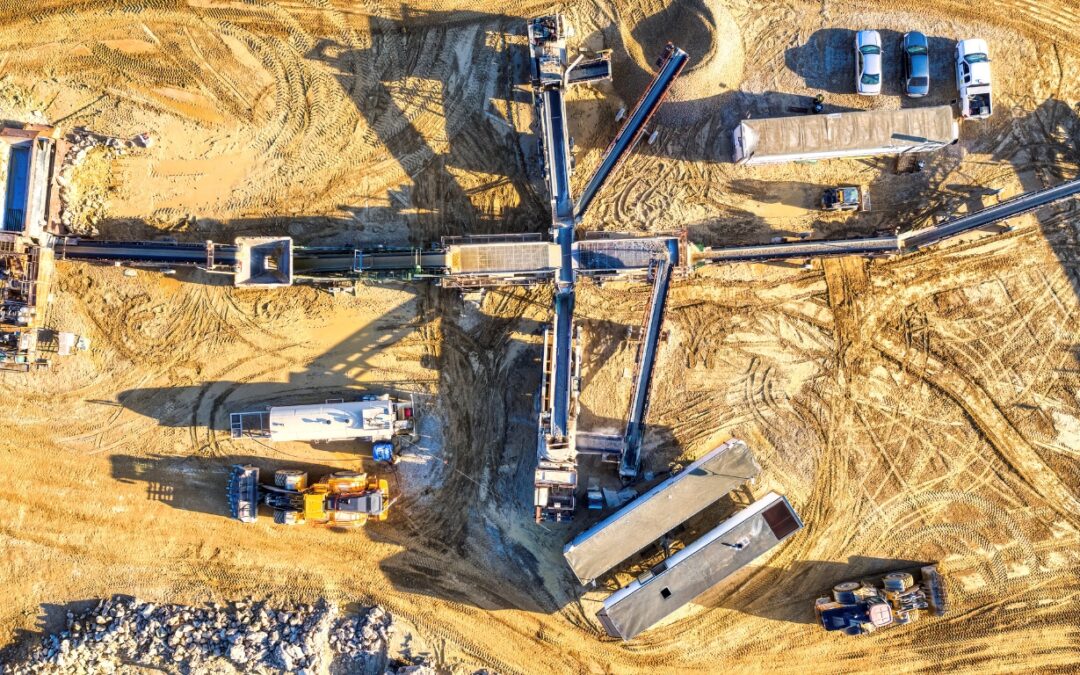
When it comes to heavy construction, infrastructure development, and municipal contracting, few operations are as essential or as misunderstood as quarry work. Yet understanding quarry operations gives project managers, engineers, and field crews valuable insight into how materials move from raw rock to finished aggregates ready for delivery.
At Roblar Quarry, we know that efficiency is not just a goal; it’s the foundation that keeps the jobsite supplied with reliable materials day after day.
This behind-the-scenes look breaks down how quarries work, how materials are produced, and the systems that ensure safety, consistency, and dependable service for every load leaving the site.

How Quarries Work: The Foundation of Modern Construction
Before a single ton of rock reaches your jobsite, extensive planning and precision have gone into its extraction and processing. By understanding how quarries work, contractors can better appreciate the complexity behind each load delivered to their project.
At its core, a quarry is a highly engineered production facility. Geological evaluations determine the quality and type of rock available. Operations teams design benches, access roads, and production sequences that maximize usable resources while minimizing waste. Every phase from extraction to stockpiling is coordinated to support steady output.
Roblar Quarry operates with a long-term plan for resource management, ensuring sustainable yield and consistent aggregate quality. This structured approach supports both daily demand and the long-range needs of regional infrastructure projects.
When Quarries Were Still In Another Era
Efficiency in modern quarry operations, like those at Roblar Quarry, were once the exception rather than the rule. In fact, most of what makes operations like ours possible didn’t come into play until the 1970s and 80s. Before that time, issues such as safety was marked by minimal regulation, inconsistent use of PPE, and high injury rates. Onsite logistics consisted of paper tickets, radio coordination, and long onsite waits. Then there was the subject of efficiency: workers and operators were saddled with manual controls, older equipment, and inconsistent quality.
Changes came largely from the implementation of the Federal Mine Safety and Health Act of 1977, which created MSHA (Mine Safety & Health Administration). Before MSHA, quarry safety varied widely by region and company; after MSHA, consistent national standards were enforced.
Quarries have come a long way since Fred Flintstone worked for the Slate Rock and Gravel Company, a quarry in the town of Bedrock!
The Aggregate Production Process: From Rock Face to Finished Material
The aggregate production process is where efficiency directly influences material quality and jobsite performance. Each step builds on the last, creating a controlled flow that ensures every ton meets specifications.
Here’s How it Works at Roblar Quarry:
- Drilling and Blasting
Specialized crews drill precise patterns into the rock face. Each blast is carefully engineered with modern vibration control technology. The goal is to create optimal fragmentation, or rock broken into manageable pieces for excavation. This improves “downstream” efficiency and protects equipment longevity.
- Excavation and Hauling
After a blast, loaders and haul trucks move material to the primary crusher pad. Proper loading techniques and well-coordinated truck cycles reduce idle time and keep the crusher fed at a steady pace. This stage is where efficiency directly affects daily tonnage.
- Primary and Secondary Crushing
The primary crusher reduces large rock into more workable sizes. Material then travels through secondary and sometimes tertiary crushers for final shaping. Adjustments to crusher settings, feed rate, and screening configurations allow Roblar Quarry to consistently produce aggregates that meet strict specifications.
- Screening and Stockpiling
Vibratory screens separate processed material into specific sizes. Finished aggregates are stockpiled separately to avoid contamination. The arrangement for stockpiling the various aggregates is not random. Onsite logistics, safety, and controlled material flow determine placement.
During each of these phases, routine testing ensures that products maintain uniform gradations and performance characteristics needed in civil, municipal, and commercial construction.

Material Loading: Precision That Keeps Jobsites Moving
Making useable rock is one thing. Getting it safely and efficiently to a job site in a timely manner is another challenge altogether. Which is why once the aggregate product is produced, material loading becomes such a critical operational function. Efficient loading minimizes wait times for drivers and ensures that contractors receive accurate weights and clean, uncontaminated products.
At Roblar Quarry:
- Loaders are assigned by product type to avoid cross-contamination.
- Operators rely on calibrated onboard scales to ensure consistent load accuracy.
- Traffic flow around the loading zone is designed to reduce bottlenecks.
- Digital ticketing and scalehouse systems help expedite departures, reducing driver delays.
It is this emphasis on quality and efficiency that directly impacts contractors who depend on fast turnarounds, consistent material quality, and predictable scheduling. But there is much more to an optimal quarry operation than creating and loading aggregate.
Quarry Safety: The Non-Negotiable Backbone of Operations
An in-depth consideration of quarry operations isn’t complete without acknowledging the central role of quarry safety. Safe operations are not only efficient operations, but they’re essential for both employees and customers.
At Roblar Quarry, for example, we use a multi-layered safety approach:
- Controlled access points: Visitors and drivers follow designated routes, reducing interactions with active production areas.
- Daily equipment checks: Loaders, haul trucks, crushers, and conveyors undergo systematic inspections.
- Proximity awareness systems: Modern equipment includes sensors, cameras, and in-cab alerts to reduce collision risks.
- Training and certifications: Operators receive ongoing education in equipment operation, hazard recognition, and emergency response.
- Dust and noise mitigation: Water trucks, screening enclosures, and operational timing strategies help maintain environmental and community standards.
Because safety is integrated into every activity, Roblar Quarry can maintain high output without compromising worker well-being or regulatory compliance.
Onsite Logistics: The Engine Behind Efficient Quarry Operations
Behind every smooth loadout or on-time delivery is a whole network of moving parts working together. This internal coordination of onsite logistics is where much of a quarry’s efficiency is won or lost. At Roblar Quarry, logistics management ensures that every process is synchronized, from extraction to loading.
Some of the key components include:
- Efficient Traffic Flow
Dedicated haul roads, traffic patterns, and signage reduce congestion and accidents. Drivers know exactly where to go, and equipment moves in predictable lanes.
- Equipment Scheduling
Loaders, trucks, and crushers operate on coordinated timing. This reduces downtime and ensures that the right materials are available when needed.
- Real-Time Communication
Dispatch, scalehouse personnel, and equipment operators maintain constant communication via radio and digital systems.
- Inventory Management
Stockpiles are monitored for volume, quality, and moisture content. This ensures that the quarry can meet demand for high-priority materials, even during peak construction seasons.
With strong logistics, the entire operation becomes a reliable extension of the contractor’s jobsite schedule.
Why Efficient Quarry Operations Matter to Your Project
Contractors, public works departments, and engineers depend on consistent, high-quality material supply. Efficient quarry operations directly support:
- Predictable delivery schedules
- Accurate order fulfillment
- Compliance with project specifications
- Reduced downtime on the jobsite
- Better value for clients and taxpayers
When a quarry runs efficiently behind the scenes, the benefits extend across every phase of a project: from bidding and planning to final paving or concrete placement.
The Power Behind Roblar Quarry’s Operations
Roblar Quarry’s commitment to efficiency is more than just operational philosophy for us. It really is the “engine” that keeps our regional construction, infrastructure, and municipal projects running smoothly. And by having a better understanding of how quarries work and how the aggregate production process unfolds, contractors gain insight into the precision, safety, and logistics required to deliver top-quality materials.
From optimized material loading to rigorous quarry safety and smooth onsite logistics, every part of our operation is designed to support reliable supply and exceptional service.
For contractors, engineers, and public agencies seeking dependable aggregate supply, Roblar Quarry stands behind every load with professionalism, consistency, and the operational excellence that powers the jobsite. Contact us today and let us show you how we can partner with you for your next project.
